
On the farm, we begin each day with the light. That’s 7:30 am now it’s winter. The 5:30 am starts of high summer feel so far off, but they’ll come around again before we know it. On these winter mornings, fog sometimes drifts around our ankles as we pull on work boots and reach for harvest knives. Rhys, Brendan and Sarah read out the daily pick lists, assigning each farmer a task at each of our three sites – who’s picking broccoli or cauliflower, how many bunches of silverbeet or rhubarb. The sunlight burns up the fog and energises us. Our bodies wake with movement. The plants stretch their leaves saluting the sun and we humans move more swiftly – slice, bunch, pack, repeat. Harvesting is always the first thing we do. Half of our customers receive our vegetables that very afternoon, the rest just the next day. Freshness is everything – alongside flavour.
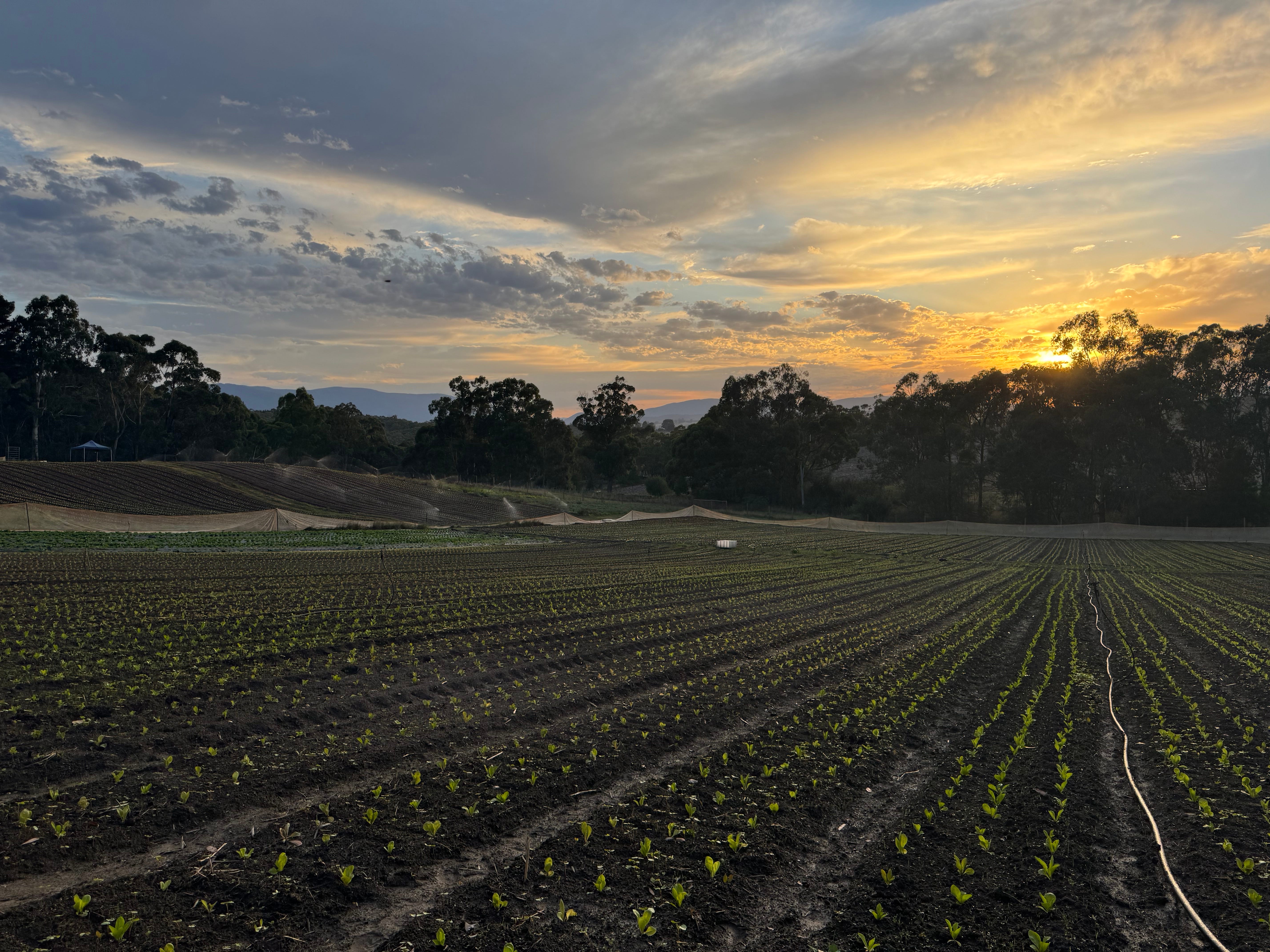
As many of you know, we’re on Wurundjeri Country east of Melbourne in the Dandenong Ranges. This is rainforest country with rich, volcanic soil and abundant rainfall. Prime growing conditions. Our purple sprouting broccoli is in fine form this time of year. Don’t call it broccolini! The big guys own that name. Slice, bunch, pack – the broccoli florets are royal in their purpleness, the leaves dark and soft, the stems sweet. They taste great, but we also feel great eating them. Sometimes we walk past the fruit and veg section of the supermarket and see broccoli stalks snapped off and left behind. Are these people mad? Don’t they realise the stalk is the best bit? Our sprouting broccoli are headed for chefs around and in Melbourne and Sydney. It’s satisfying, seeing the creative ways they prepare it so the intense colour remains and the integrity is retained.
We always strive to maintain a strong dialogue between chef and farmer. You can’t produce great food without great source ingredients and it’s thrilling to think what we grow influences their menus. Chefs are hardworking, dedicated people who respect growers and the hardships we endure. The deepest pleasure, though, is in nourishing people. We provide fresh veg for our team each week and sell not only to our local community, but to families all over Melbourne. It’s easy to believe we are doing something good for the world. We are, but it’s in partnership with the plants. We water them, feed them plenty of compost, weed their soil, and prune their branches. In return they feed us. We look after the plants and the plants look after us. It’s difficult to feel lonely or stressed in the garden. With your hands in the soil, you know where you belong.
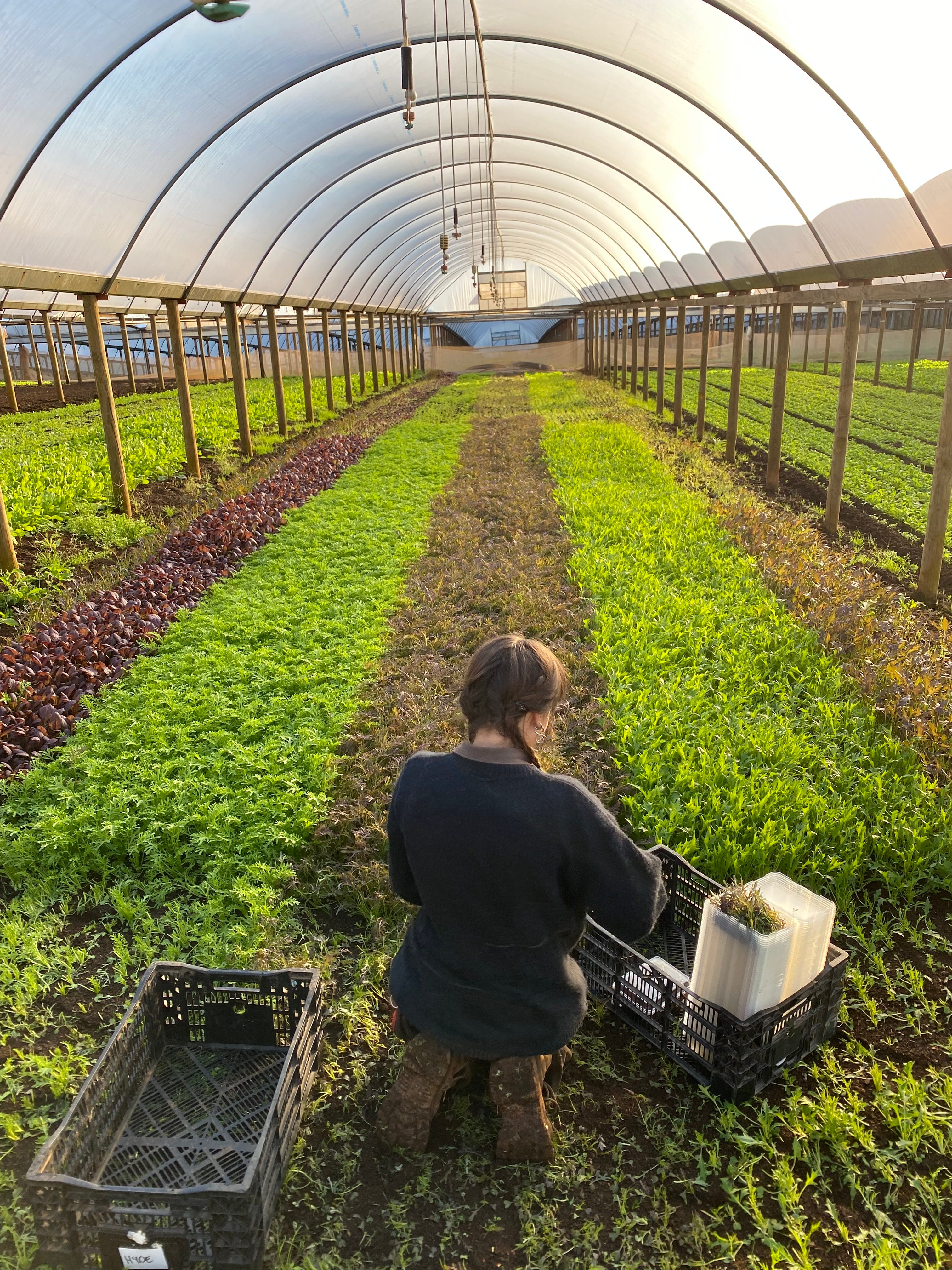
Positivity is our way of life on the farm; the idea of success a reason to get up in the morning. Without fierce positivity the uncertainty would be too much. When the ducks eat our radicchio seedlings and the rabbits ring-bark our fruit trees, we believe that next season will be better. We must or we’d never continue. As young farmers, over a decade ago, we grew despondent at times. Like when we planted rows of cauliflower seedlings only to come back the next day to find the cut-worms had sucked the juice from the tiny stems overnight and each little plant had fallen over on itself. There are always hardships to overcome, but there are more successes. That’s the life of a farmer. Oliver and I are now accustomed to the notion of failure being tied to success. We try our best to buoy our young farmers with positivity. Something fails every season. Nature gives and she takes. We reassess. How can we grow better next year? The new farmers learn that life on the farm is not always theirs to control. We do our best, that’s all we can do. Farming has taught us resilience and we’re grateful.
A grower must plan for the future. There’s optimism in that. We prepare for abundance way back in the hunger gap – that time of year towards the end of winter when there’s little ready to harvest. We plant summer crops weeks and months before they will bear fruit. It’s an exercise in hope. Each year we hope the berries will ripen. We hope the birds leave enough of them for us to enjoy. We hope the dam won’t go dry; we hope strong winds don’t blow the blossoms off our peach trees before they set fruit. We hope. In times of crisis, hope can sometimes feel like all we have. We make the best decisions we can at the time with the knowledge we have available.
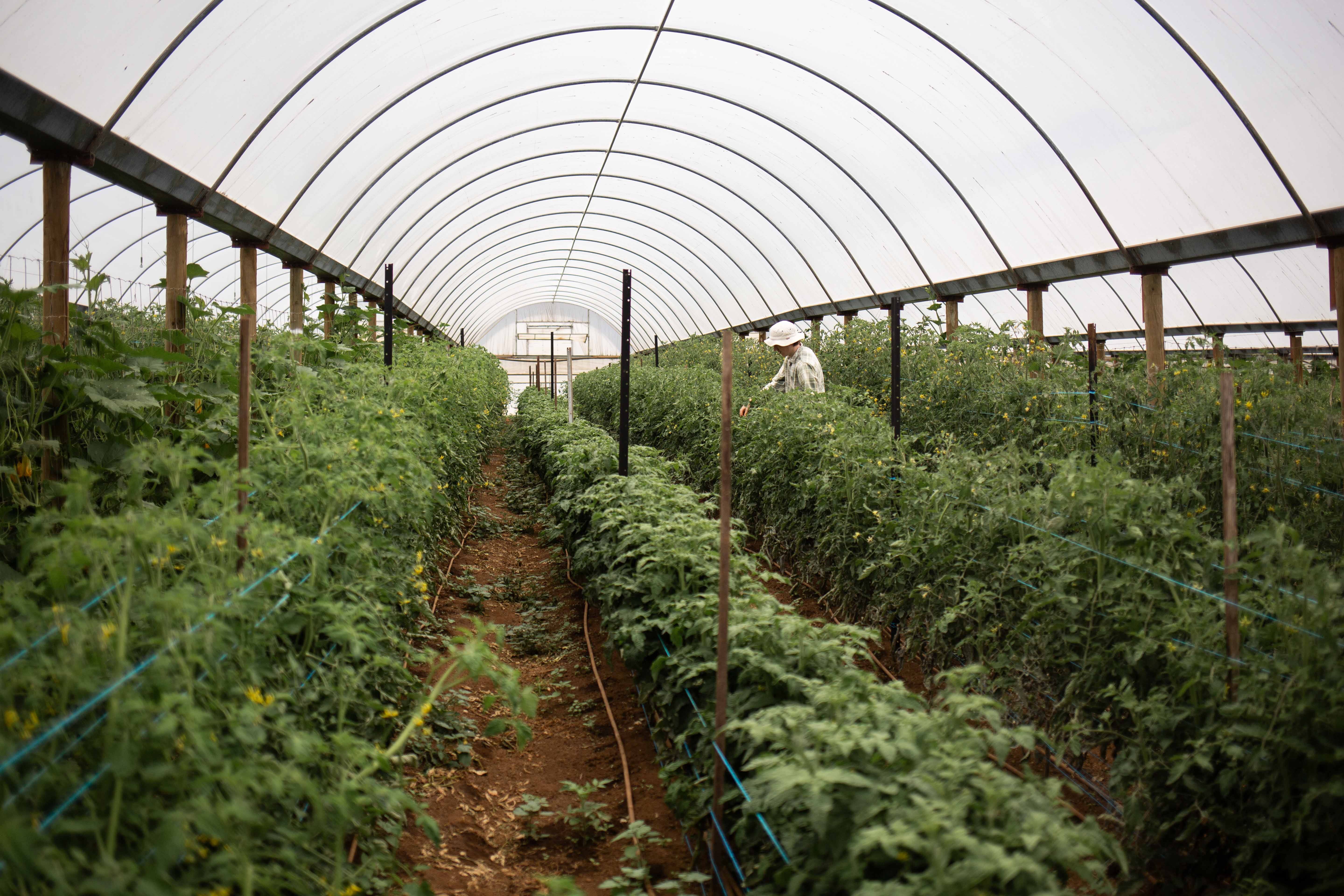
We’ve had a mild start to winter, yet somehow the solstice is already nearly upon us. The more we farm the more our lives revolve around the day lengths. In the past we dwelt on soil and ambient temperature, but we’re now trying to work more in line with the plants’ instincts. They’re genetically predisposed to respond in different ways when the daylight hours are increasing or decreasing. Plants pass this information down from generation to generation. They have memory in their way. Now we’re at a point in the year when the days are short and very little changes. But from Sunday, the days get longer bit by bit and change accelerates. By the time August arrives we’ll begin to plant crops for our fourteenth summer. Fourteen summers growing on Ramarro Farm. How time flies.
Until next time … eat well!
Words by Lisa Davis
A glorious poetic way of describing farming life, Lisa. Just beautiful.
Such a beautiful meditation on growing <3