
It rained heavily this week and the farm is thick with mud. Viscous, gory mud. Our boots stick in it and suck as we drag them free. It clogs the tread on tractors and soils the knees of our trousers. It’s not a pretty time of year to be a farmer. The skies are grey and sometimes blue then back to grey again. Things grow slowly. We eat steamed purple sprouting broccoli with toasted almonds, chilli and goat’s cheese, we eat cauliflower soup with crusty bread. On grey days the future feels far away, belonging somewhere in the bright days of summer. But the summer can’t be abundant without winter planning. Already we’ve sown zucchini seeds in the greenhouses and if all goes to plan, we expect zucchini flowers and the first fruit in late September. Cherry tomatoes go in the ground in three weeks, and after that, onions and potatoes. And when summer rolls around with all her plenty we’ll plan for winter. And so it goes, season after season. Although, we try to mix it up every year. This year we’re growing leeks, fennel and purple sugarloaf cabbage for the first time which is exciting.
This coming spring we dive into our fourteenth season growing on Ramarro Farm. It feels like a lifetime (our son’s lifetime at least) but it’s also flown. In winter we slow down just enough to make time for reflection.
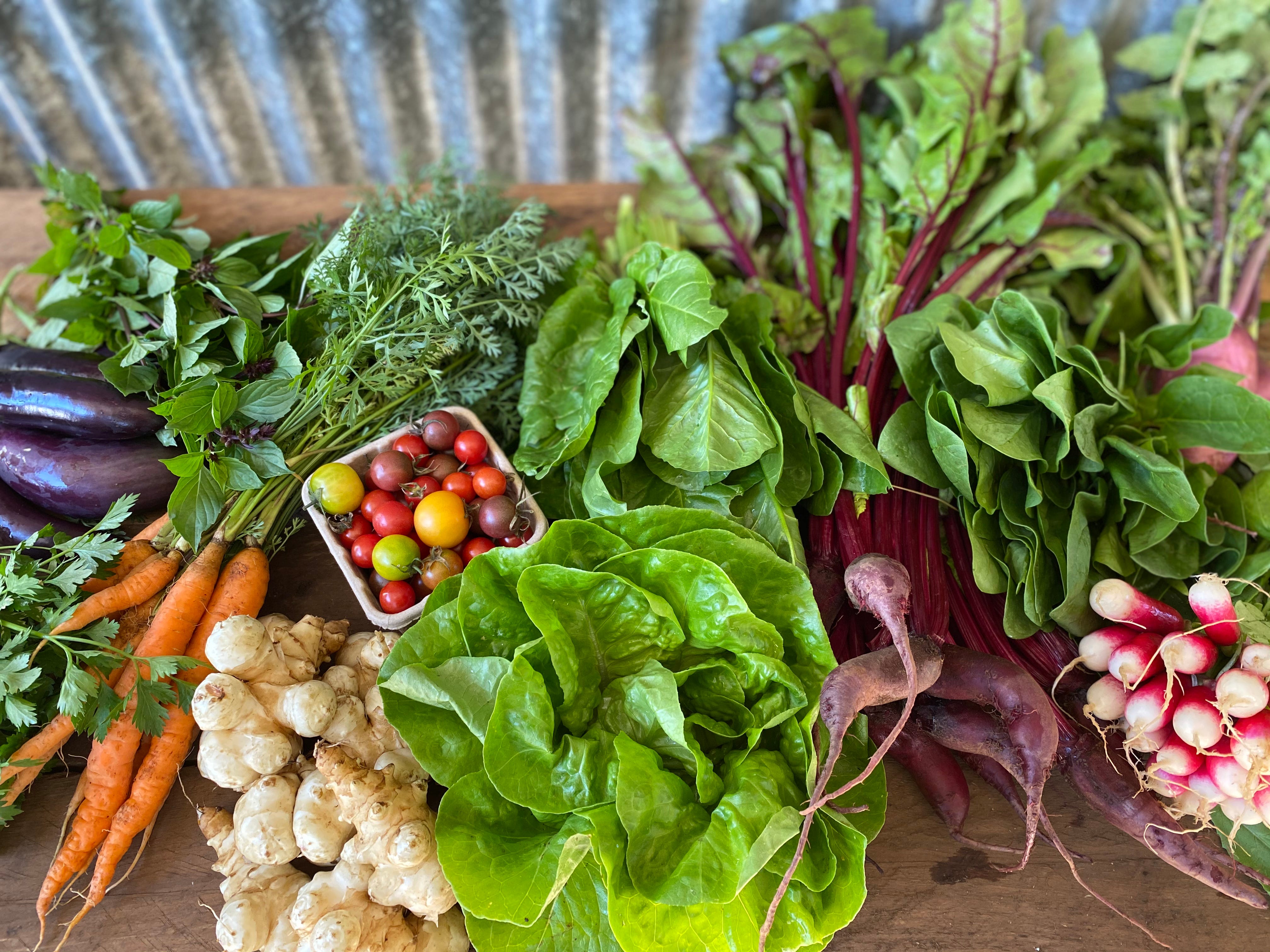
In the early days, we still had jobs off farm. Oliver worked full-time and I worked part-time. I was also writing a foodie romantic comedy called Yes, Chef! which went on to be published by Penguin Random House. Back then, the farm existed solely in our back garden, two patches totalling about a quarter of an acre. In between writing scenes for my novel at my standing desk I would duck out into the garden to water the carrots. When you first sow carrot seedlings you can’t allow the soil to dry out or they won’t germinate, so I was out there four or five times a day in summer with the watering can walking up and down the rows. It was very small-scale, very low tech. We couldn’t afford to do otherwise. I even harvested tomatoes at 38 weeks pregnant! Please don’t be alarmed. No one made me do this. I must have had one of those mad late-pregnancy boosts of energy. I think it was one of those situations where the fruit was ripe, but rain was coming and if I didn’t pick them then the rain might cause them to split and they’d be unsaleable. No good for anything but sauce and believe me, we always have plenty of sauce. As I mentioned last time, we spent our Saturdays harvesting and delivering, our evenings weeding and watering, our Sundays planting. When our son was born, we needed help. Our neighbour had a friend who was doing his chef’s apprenticeship and the two of them would harvest peppers for us when the crop got the better of us. Those early days of baby and farm and work and writing were not easy. Something had to give. When I look back now, becoming full-time farmers feels like the bravest thing we ever did. It was a huge risk, but Oliver had experience running successful businesses and we were both committed to doing whatever it took to make it work.
Sometimes the stars align just when you need them to. We couldn’t see a way to make a living year-round from growing outdoors, not in the Dandenong Ranges where the winter temperatures slide consistently into single digits, where heavy rain and clouds covered us like a blanket for months. And then, a set of greenhouse tunnels became available to rent just two minutes’ drive from us. There were 46 tunnels all up. Too many for us to leap into all at once. The owners generously allowed us to lease just one section. Before we knew it, we’d rented the next lot and the next. We did everything we could to make a sale. We knew it was important to make as many sales as possible, regardless of size, not just for the money but to get in the habit of making money. So, alongside our restaurant sales and the odd retail customer, we also ran a Saturday market on our farm. Every Saturday morning we’d wake up early to harvest, wash and display our produce for sale. We started small again, selling out of our shed – our toddler stealing a cucumber here, some sorrel leaves there – but over the years we were forced to create a separate area for our growing stall. We sold eggs and preserved olives and jam made by Oliver’s mum – whatever we could! And it worked. The response was fantastic. We embedded ourselves in our community and it wasn’t long before that community saved us.


We sell to a number of retail outlets now. We feel so proud knowing that families and loved ones are sharing our produce around the table each week. But in the early days, our vision was very much to supply Melbourne’s best restaurants with the freshest, most flavoursome, best-looking soil-grown vegetables we could and to supply them consistently. And then covid hit. Restaurants were forced to close. Our main source of income dried up. They were scary times. Our Italian friends warned us not to underestimate the virus. They were experiencing the horrors first-hand in their community. It didn’t feel like restaurants would be allowed to reopen any time soon. We needed to adapt. In one afternoon, we set up the online orders function on our website and put the word out on Instagram. That week we sold over 100 veg boxes. People came from all over Melbourne to support us. Thank goodness we had a small but fantastic team working with us by then! And when the 5km rule came into force our community was there. Our shed became a kind of piazza. We bought a second-hand coffee machine and made coffee for free. People would arrange to pick up their veg at the same time as their friends. And although they couldn’t linger too long, it was enough to keep us all going through those isolating times. We connected. And best of all we cooked. How we loved hearing the meals everyone made with their veg boxes each week. I would never wish to glamourise what was a terrible time for many, but there was something special about all the extra time people had when they weren’t commuting to and from work. They gardened and cooked and read.
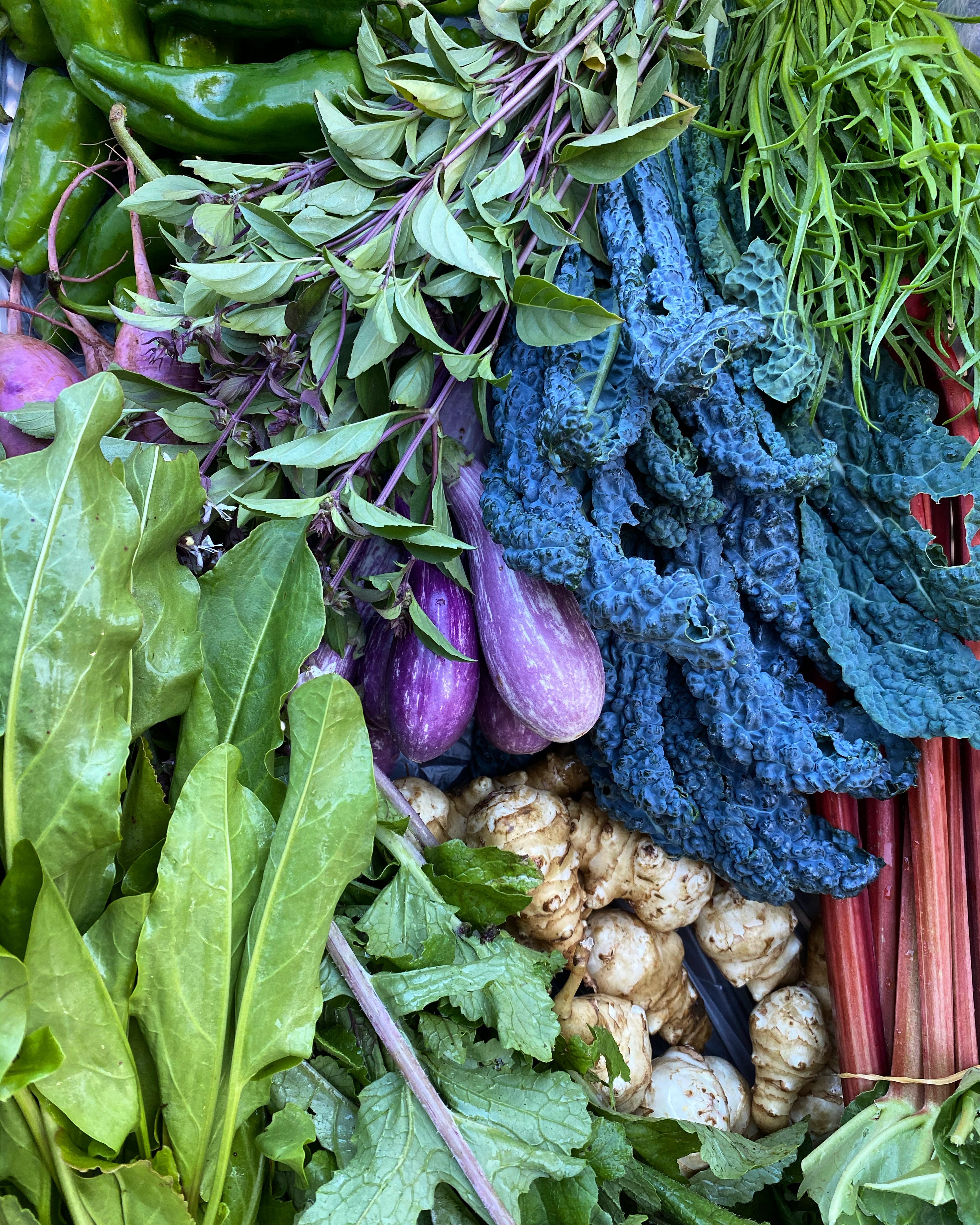
Our business survived because we were able to adapt. Ever since, we’ve stuck to our core values but have always been prepared to shift our goals with the changing environment. We continue to sell veg boxes from our shed, but now we also sell to all the retail stores listed below. We still grow from our home farm and all 46 greenhouse tunnels, in addition to the new farm we grow radicchio on. We sell to Sydney and Brisbane and even sometimes Adelaide alongside Melbourne. Every year we adapt something so that it all continues to work out in the wash.
Until next time … eat well!
Lisa, Oliver and the Ramarro Farm team
Words by Lisa Davis
Thank you for your hard work and beautiful produce ❣️❣️❣️
Enjoy your stories and your produce and you both do a fantastic job along with your team.