
It’s 2023 and we’re on a farm outside Chioggia in the Veneto region of Italy speaking to one of the leading seed producers of radicchio. “The radicchio has a mind of his own,” the expert says, indicating across a vast field of loamy, alluvial soil. The flat landscape creates extensive views. The fields go on and on, interrupted only occasionally by a handful of trees or a grey-green stream. Radicchio has long been a winter delicacy for us, but at that stage of our farming careers, we haven’t been able to grow it successfully on a large scale due to a lack of outdoor growing space. But that’s about to change. Later that year we’ll settle on a new farm in Wandin where cold nights and winter frosts – perfect for creating vibrant colours in radicchio – are plentiful, so it’s time to get planning. Our visit to the Veneto is to source the kind of quality genetics that will mean we can bring more varieties of this beautiful product to Australian diners. That was three years ago. Fast-forward to 2026 and we now grow a range of radicchio with such intensity of colour and beauty of form that even the Italians are impressed.
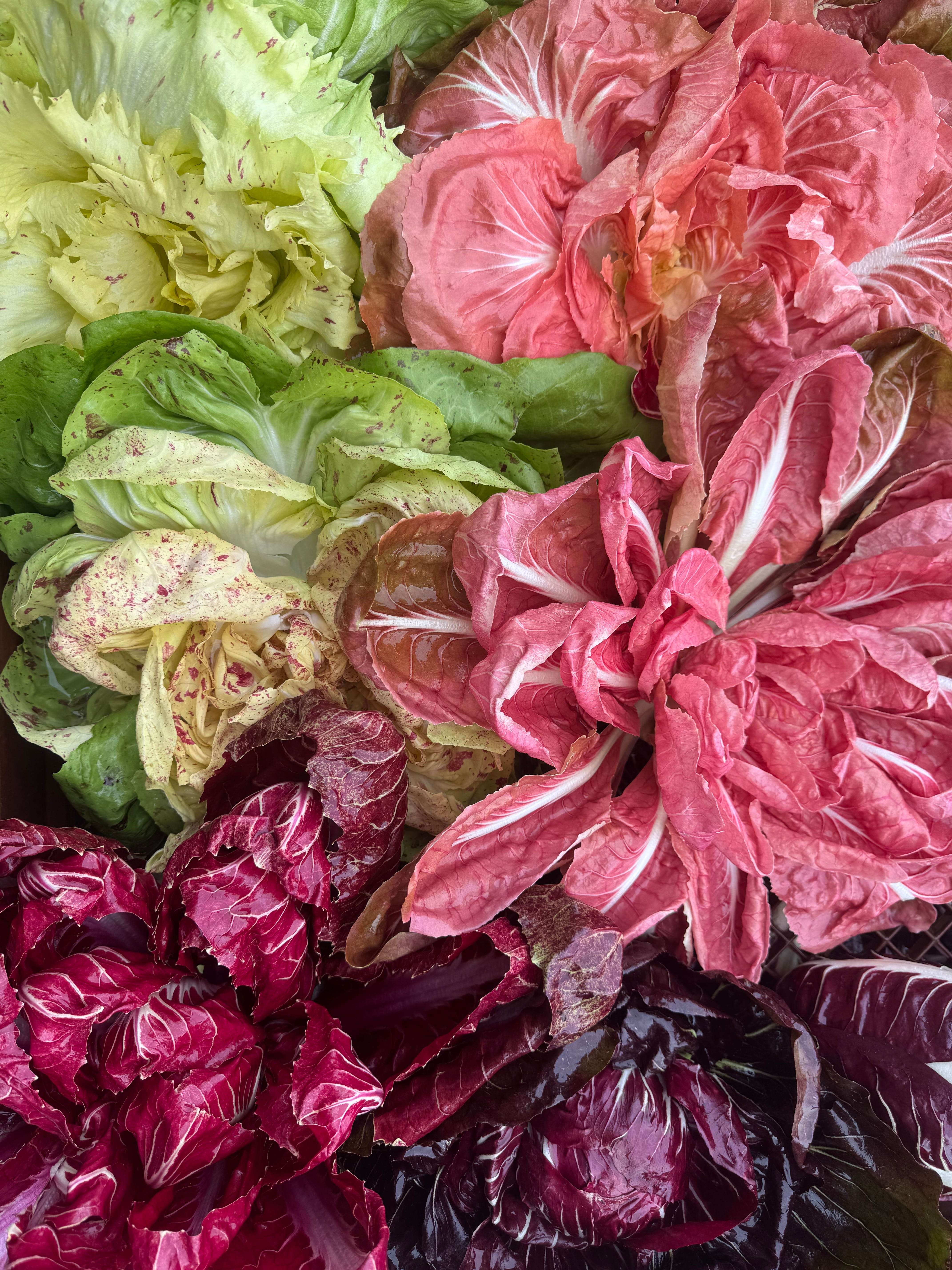
The Veneto is Italy’s most visited region, thanks to Venice. But there’s far more to it than gondola rides and stunning seafood. It’s a fertile region in the north-east of Italy stretching from the Dolomite Mountains to the Adriatic Sea and famous for prosecco, risotto rice and, of course, radicchio. The different varieties of radicchio reflect the towns they’re grown in: Treviso, Lusia, Castelfranco. The variety we’re most familiar with in Australia is Chioggia, the red ball radicchio known for its bitter flavour. The reason conventional growers don’t grow the other varieties here is because we live in a country where supermarkets dictate what’s grown based on shelf life and consistency. The conventional growers are forced to grow for uniformity and, as our seed supplier says, radicchio has a personality of its own. You might plant 100 seeds and 50 of them will turn out completely different from what the packet promised. That’s unappealing for large-scale growers who can’t risk their product being rejected by the supermarkets. But for specialised growers like us, it’s an opportunity. And by importing our own seeds we’re giving the middle finger to those bland values of uniformity and making our own statement: our ideals of quality need redefining. Perhaps beauty can be found in individuality, flavour, form and cultural heritage.


Just 100 years ago the chicory of the Veneto were wild. The people discovered that when they stored these leafy roots in their stables, rather than rotting entirely, a new heart grew inside the outer leaves which was sweeter and crunchier. And even though these varieties have now been further developed, the outer, occasionally slimy, leaves of radicchio still need to be removed to get to the heart within. Our seed supplier’s grandfather was one such cultivator of modern radicchio. Our favourite is the Rosa del Veneto, which grows green until late April after which the heart fills out with the most vibrant pink leaves that are mildly bitter and soft. The appealing colour makes it in high demand with our chef customers. It looks stunning on the plate. When we reveal the outer leaves of a Rosa and what’s inside is a hyper-coloured mix of pinks and greens, we’re reminded how amazing nature is. Every time we walk into the field to harvest we find a radicchio that looks entirely different to one we picked yesterday or last week and there’s magic in that. The radicchio says, I’m not going to play by your rules, I’m running my own race. And because we sell to clever, creative chefs, we’re able to celebrate this differentiation.


The deep red of a Treviso radicchio with its alabaster centres provides much life and colour to the winter table, defying the grey skies outside with its vibrancy. This variety can be more bitter than some of the others we grow and that bitterness pairs well in a salad with orange segments, fennel and walnuts, or even simply dressed with balsamic vinegar. The less bitter varieties, like Rosa, Lusia or Castelfranco found in our radicchio mix, are great just as they are or with a touch of salt and olive oil. In winter we find there’s enough variety to eat radicchio every day. Bitter flavours are said to be good for healthy liver function, and it feels more filling in the colder months than a salad made of lettuce. Radicchio and red wine risotto is a beautiful winter dish, and we sometimes enjoy braised radicchio alongside a steak. We’ve even been approached by someone who wants to use the outer leaves of our radicchio to make Amaro, the Italian liqueur drunk as a digestif.
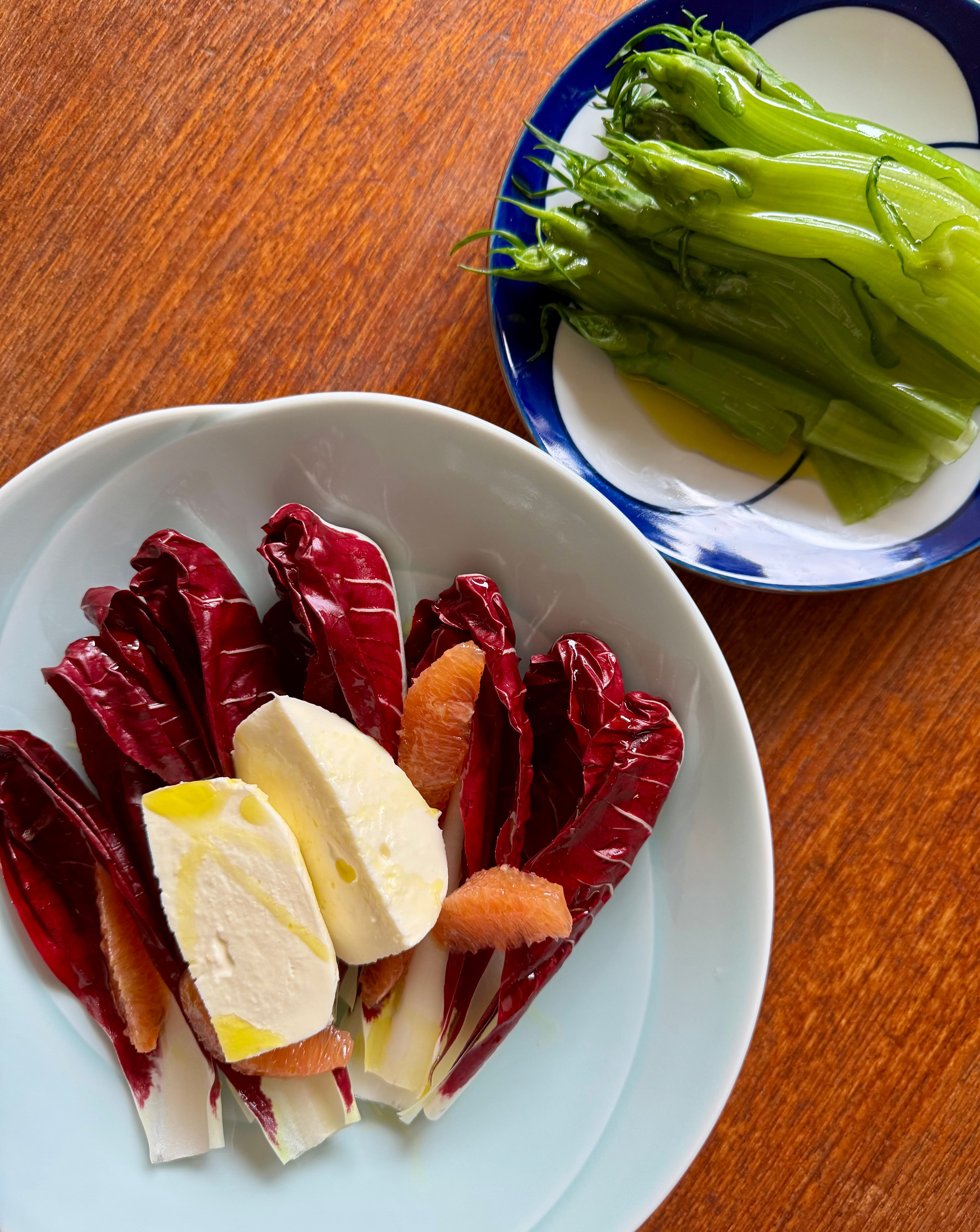
All our retail stockists (listed below) carry our radicchio mix. But if you’re looking for individual varieties, our friends at CIBI Collingwood are hosting their monthly produce market this weekend on Friday 5 and Saturday 6 June. The market is a great opportunity to cook with fresh ingredients you might not always come across and bring something special to your long weekend gatherings. You can even order one of our veg boxes to pick up from CIBI. Orders in by midday Wednesday 4 June. Radicchio will also form part of the veg boxes we sell to pick up from the farm all winter.
As I wrap up this newsletter, it strikes me that perhaps we should all be more like radicchio. Running our own race, celebrating our cultural roots, and resisting uniformity by maintaining minds of our own.
Until next time … eat well!
Words by Lisa Davis