
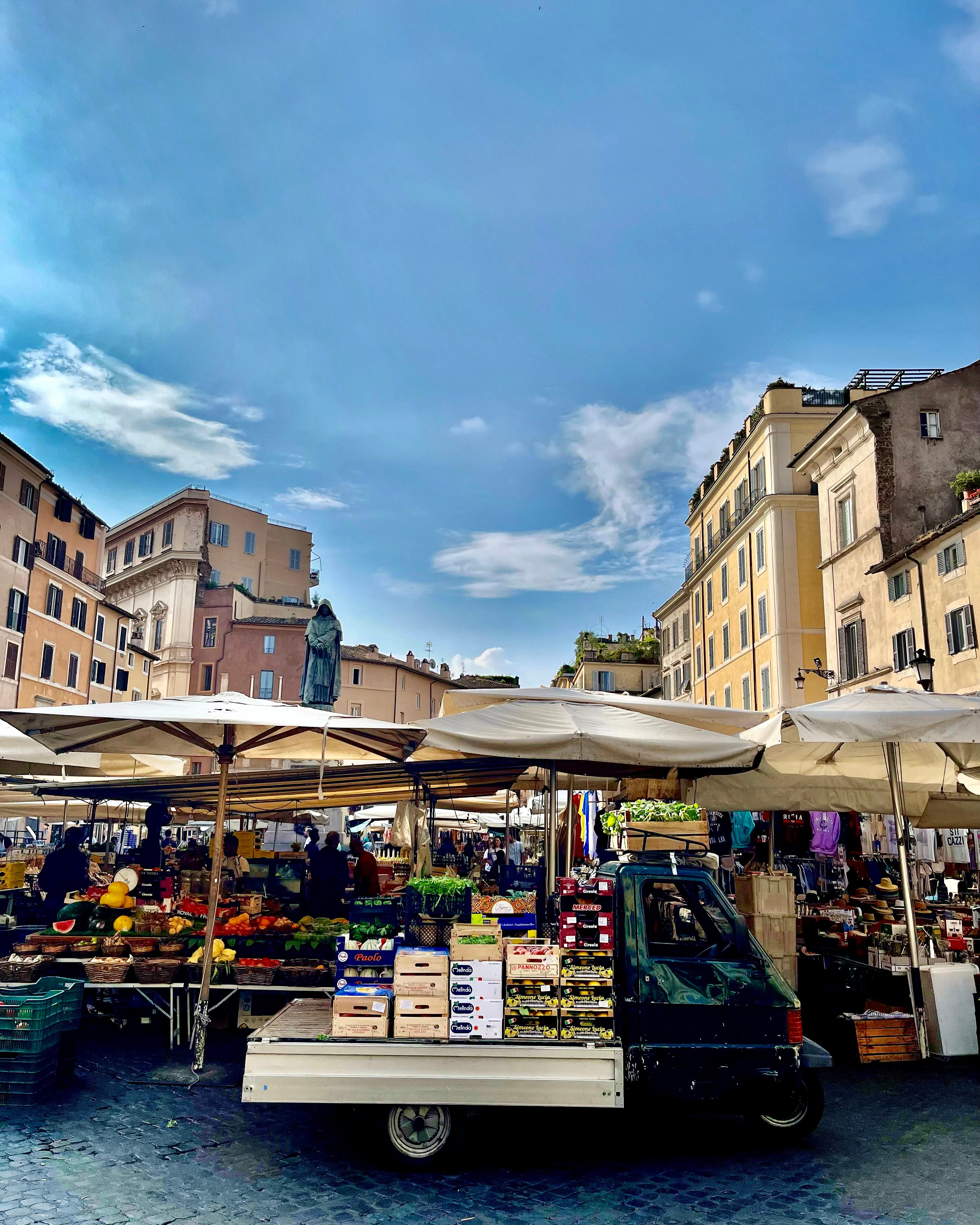
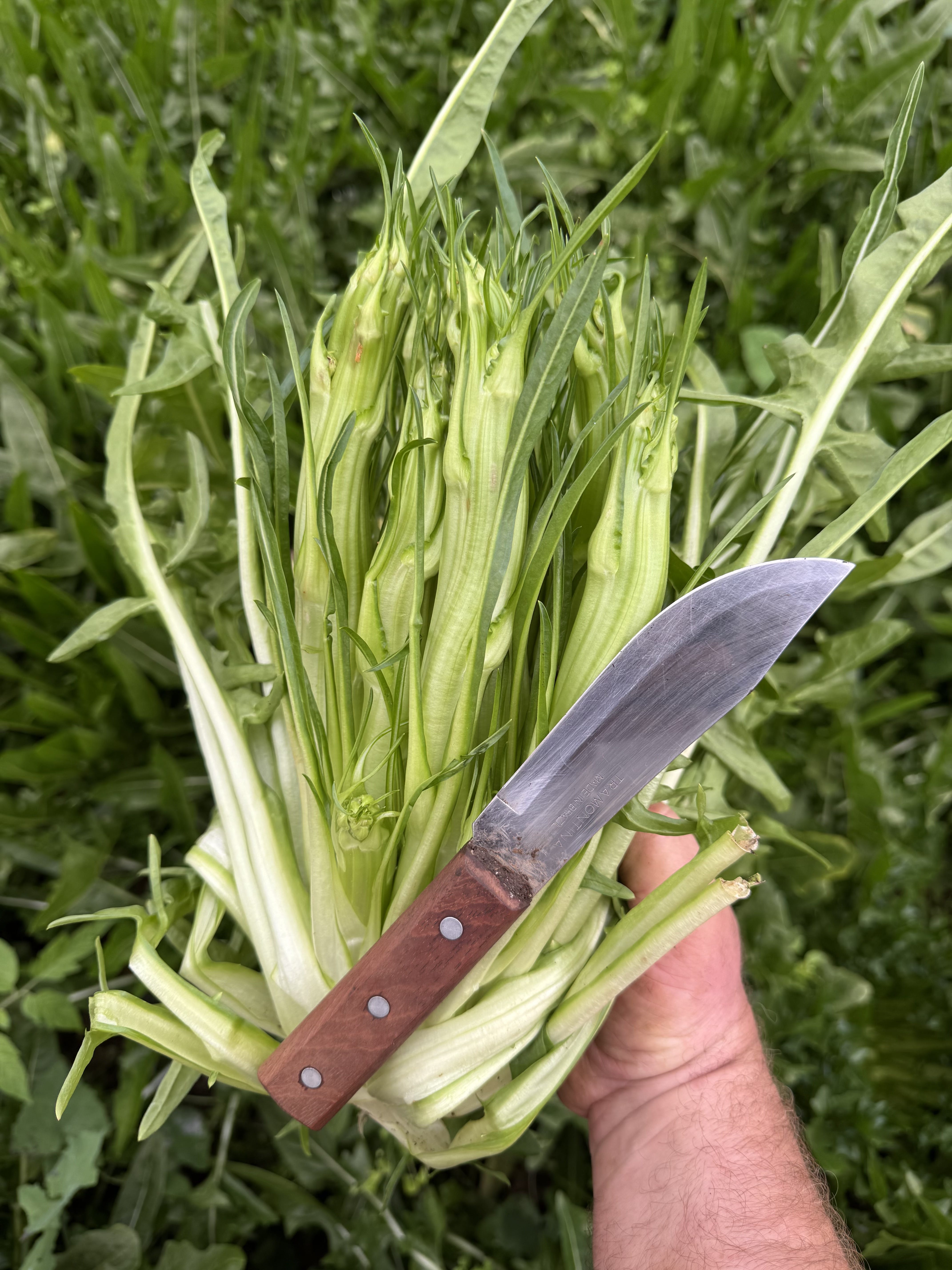
When I first visited Rome, I stood at the top of the Piazza di Spagna looking out over the rooftops of the Via dei Condotti and promised myself I would live there someday. That dream is yet to be realised, but I have returned to Rome as many times as I’ve thrown a coin in the Trevi fountain, and no visit is complete without a trip to the Campo de’ Fiori market. Donut peaches piled high, a woman turning artichokes between her fingers and a paring knife, and the under-the-sea-like puntarelle. Romans are experts at turning the seemingly inedible into something delicious. Think of the person who first discovered that behind those lethally spiky artichoke leaves lay a tasty heart. Puntarelle is the same. Imagine – someone had to try the outer leaves to discover what they really wanted were the points inside, the punte. And then they realised that if you finely slice the points and blanch them in a bowl of iced water, the slices would curl and become beautifully crunchy.
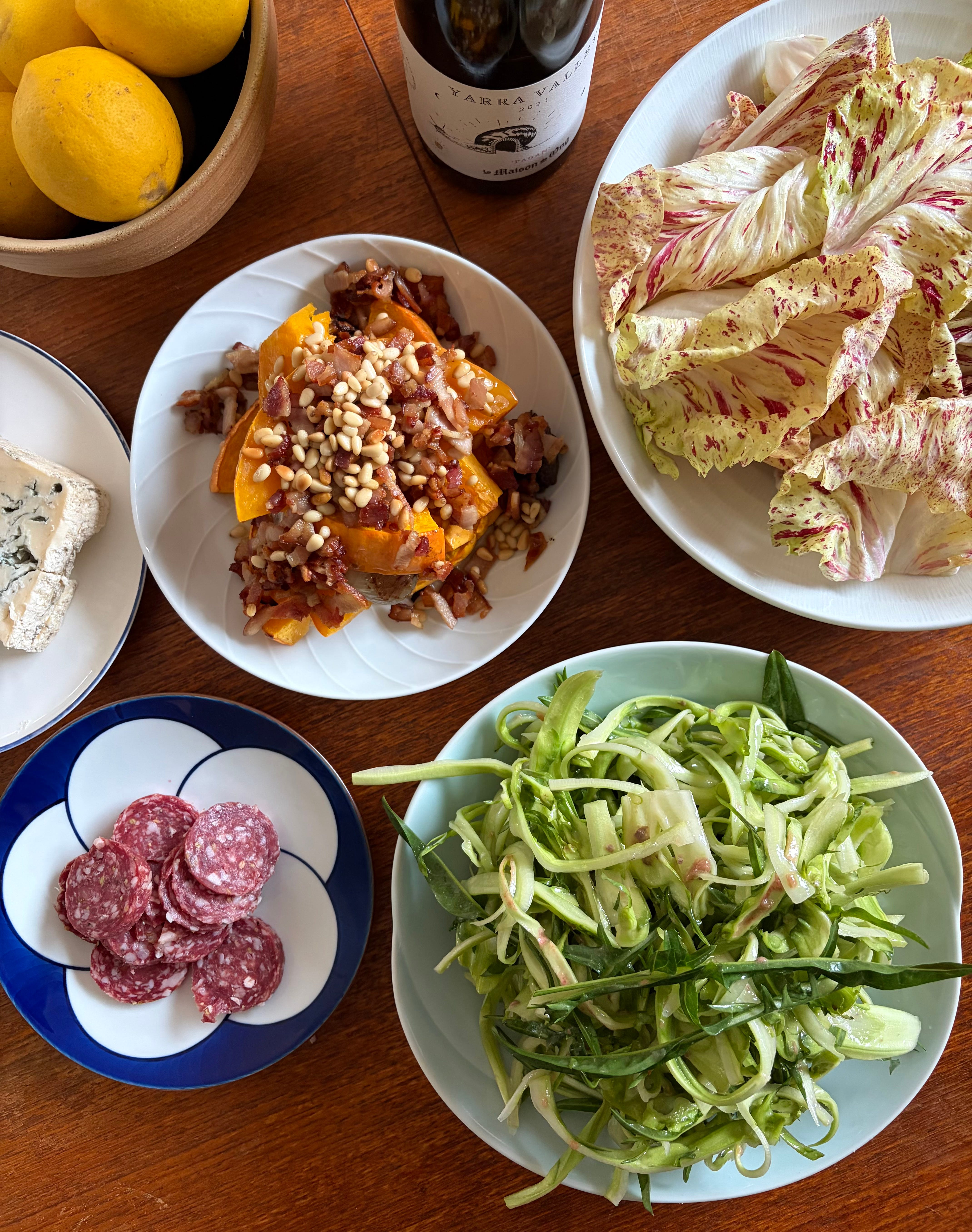
These days you can buy a taglia puntarelle, a special puntarelle cutter and any bits that don’t push through easily can be julienned with a knife. We enjoy it served the Roman way with a punchy dressing of anchovies and lemon. Costante Imports have created a great video on how to make Puntarelle alla Romana with a recipe by Julia Busuttil Nishimura. Puntarelle is not widely available in Australia, so when ours are ready we get calls from all over requesting supply; often Italians eager for a nostalgic taste of home. If you’re a meat eater, a puntarelle salad goes well alongside crumbed pork or roasted lamb as the lemony zing of the dressing cuts through the richness of the meat and the cold crunchiness is refreshing. This week you’ll find puntarelle at Toscano’s as well as in our veg boxes. In our opinion, it’s the quickest way to be transported back to Rome.
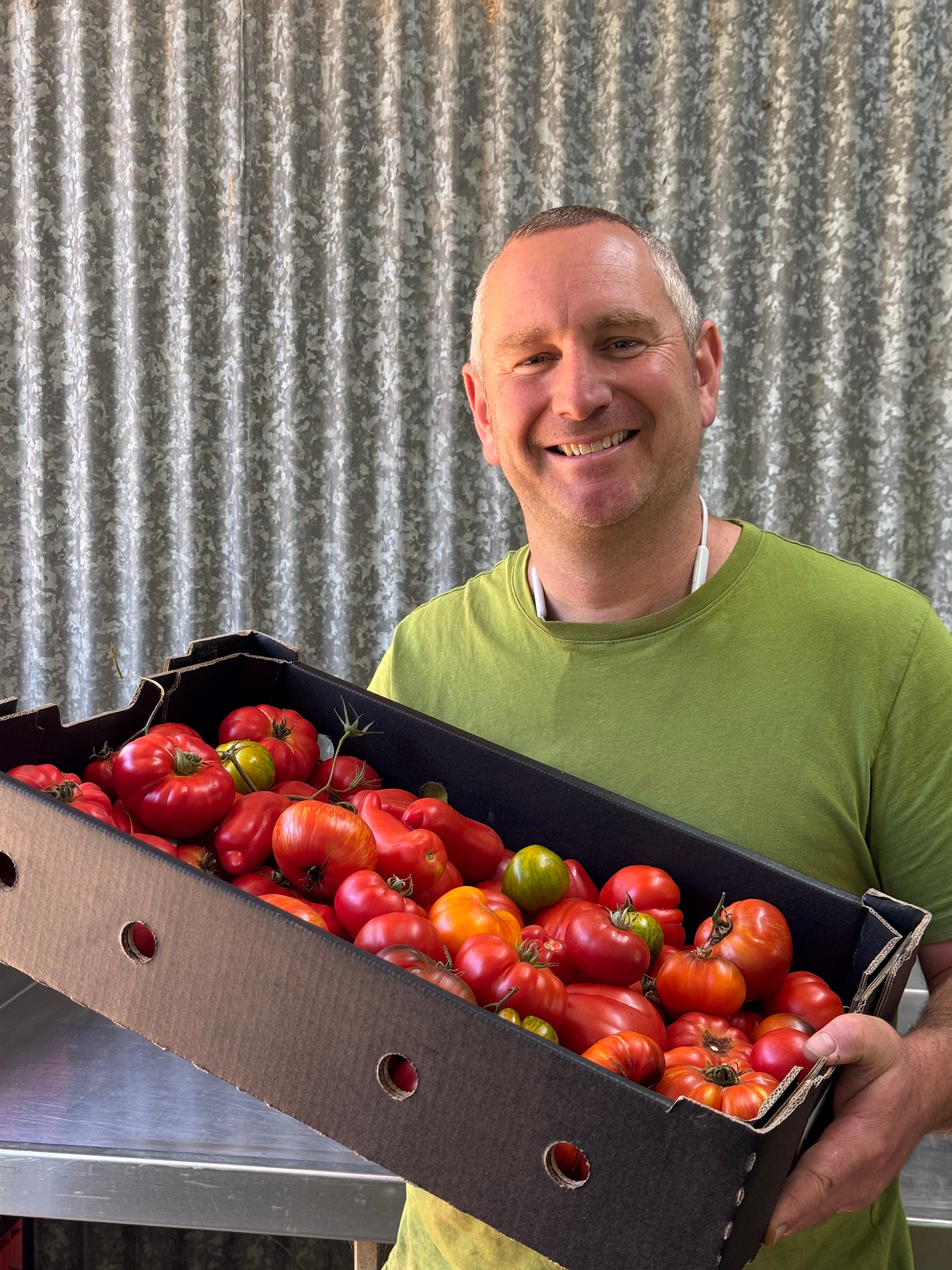
Meet farmer Oliver
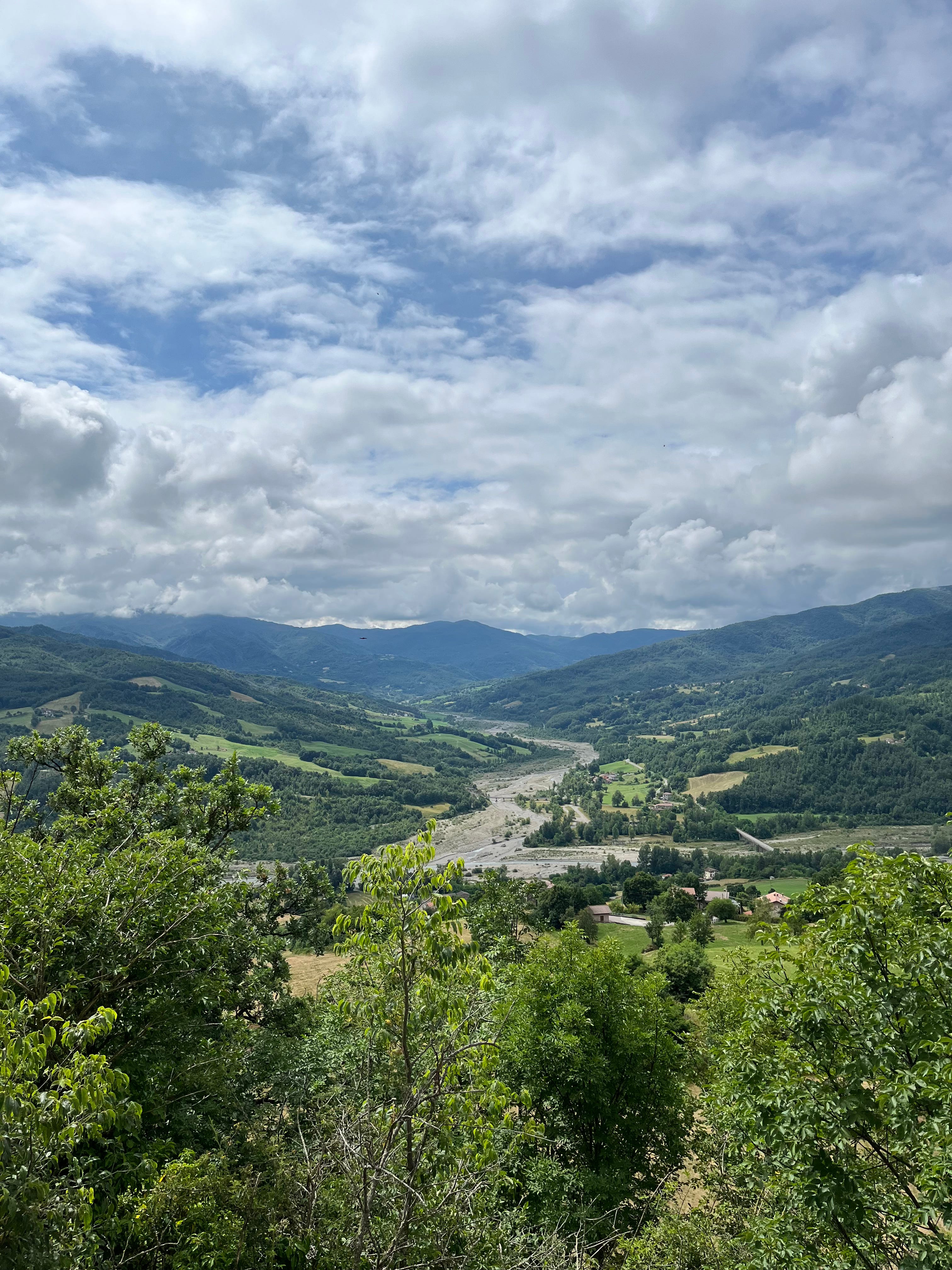
Ramarro Farm could not run without the efforts and enthusiasm of our team. So, we’d like to use this newsletter to introduce you to the incredible people that grow and prepare, pack and send the food you eat. Let’s start with Oliver! He grew up in Canberra on a block with plenty of space for a beautiful native garden and a large veggie patch. Young Oliver could often be found slipping under the mulberry tree netting or hiding in the pea bushes, shelling pods and munching on the sweet, fresh spheres right there among the tendrils. After high school, he moved to Melbourne to study Italian and sociology at Melbourne Uni and then to cement his new language skills he moved to Rome where he quickly fell further in love with Italian food and culture. After responding to an ad for a WWOOFer (willing worker on organic farms) he moved to Emilia Romagna, home of Parma ham and parmigiano cheese, where he worked at an agriturismo outside Bardi, an agricultural town surrounded by the Tuscan-Emilian Apennines. Think rolling green hills and pretty woodlands, a fortress from the Middle Ages, porcini mushrooms in the autumn and wildflowers lining the roads in summer.
Why Ramarro?
A ramarro is a small, green lizard common across Italy. During long days in the field learning his trade, the ramarri became Oliver’s work companions, basking in the sun while he dreamed up a name for a business he wasn’t sure would ever exist. Although he worked on farms in Puglia and Sardinia too, his time in Bardi was formative. It always interests me that we ended up moving to a part of Victoria that resembles Bardi: surrounded by mountains, fertile soil, rolling green hills and plenty of European trees. On returning to Melbourne, Oliver became a restaurant manager, most notably running Cumulus Inc. and Supernormal with chef Andrew McConnell. He project-managed Marion wine bar and even ran Meatsmith for a while, so he has a unique understanding of the restaurants he now sells to. In 2013, we moved from a one-bedroom apartment in Carlton to our property in the Dandenong Ranges where our aim was only to have more space, start a family and grow our own veggies and fruit. But Oliver’s enthusiasm for growing meant that he was sowing the seeds of our future before we’d even left Carlton. And the rest – as they say – is history.
More about the early days of Ramarro Farm soon. Until then … eat well!
Words by Lisa Davis @by_lisa_davis
Love this, Lisa. I’m so intrigued by puntarelle - definitely not something you can find in the veggie section at Woolies!